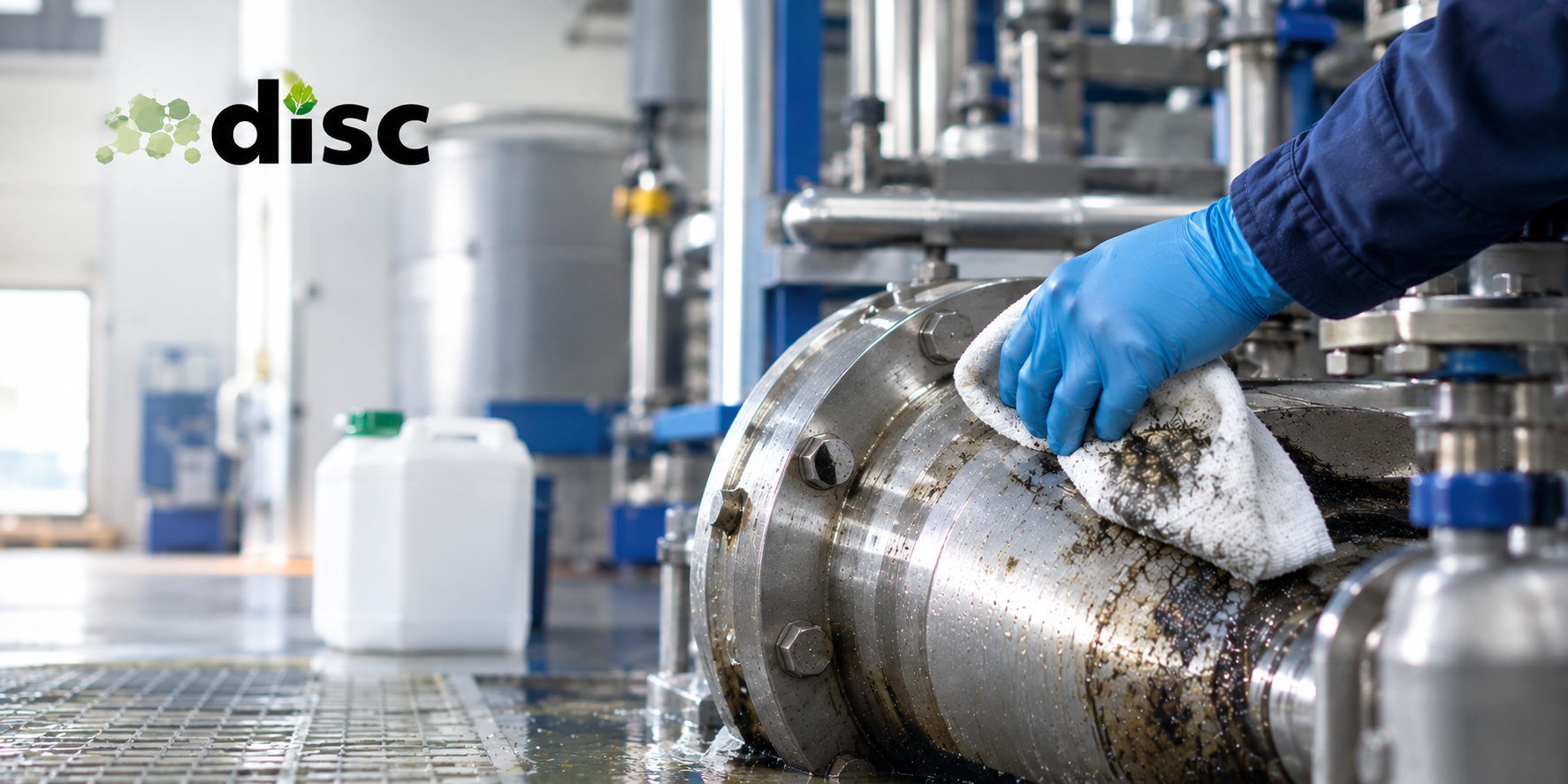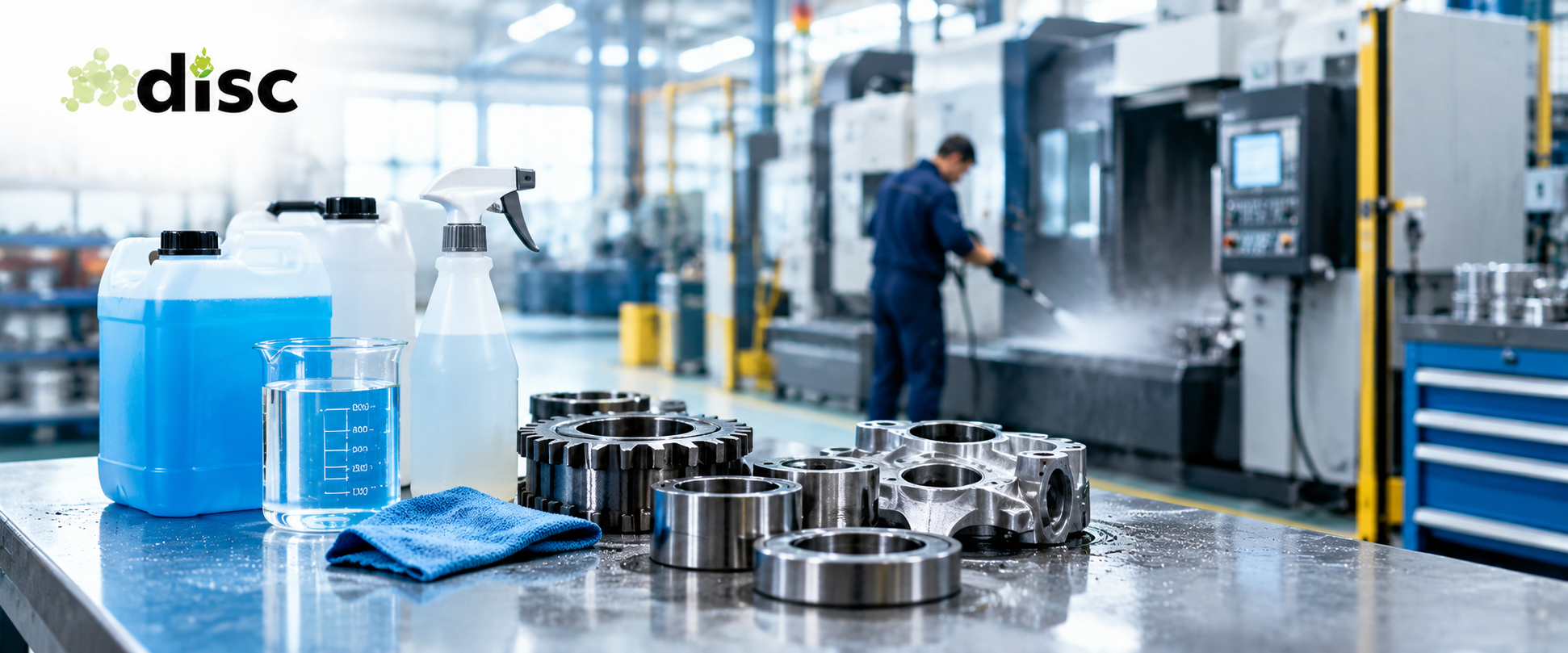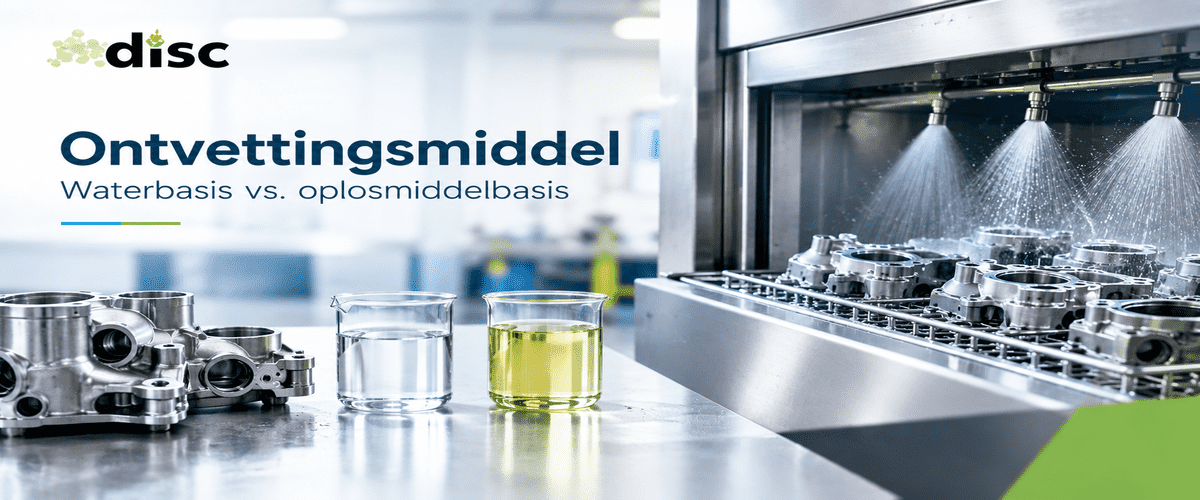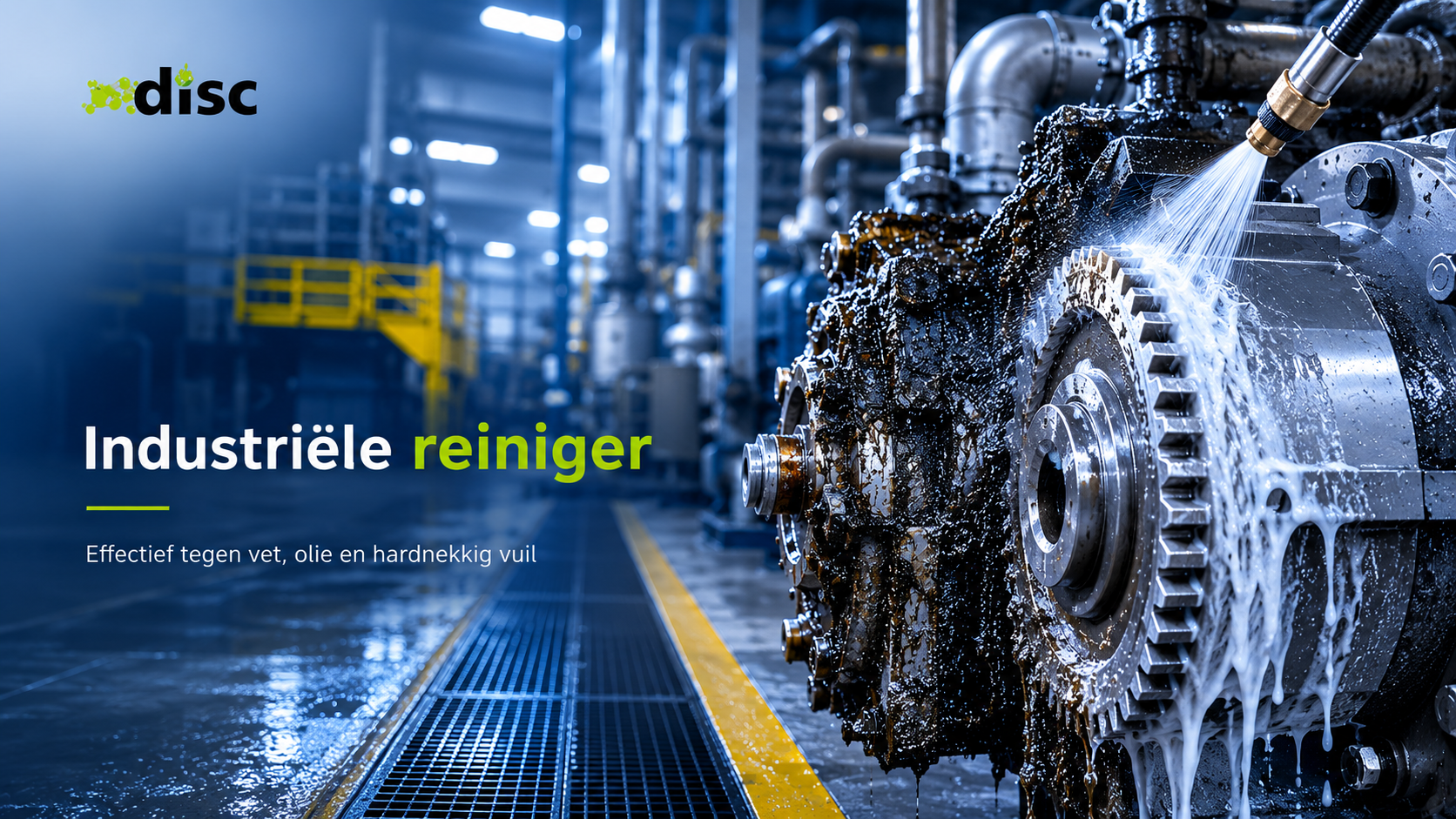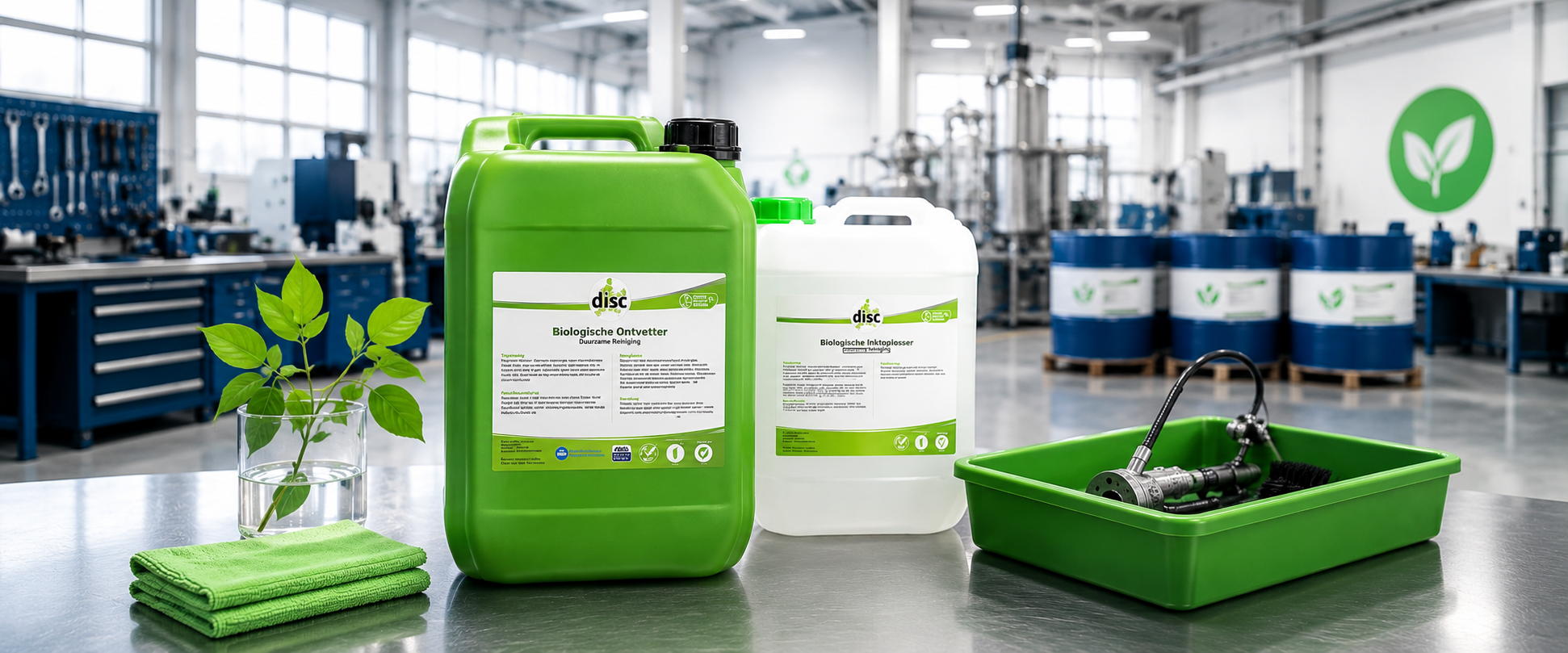
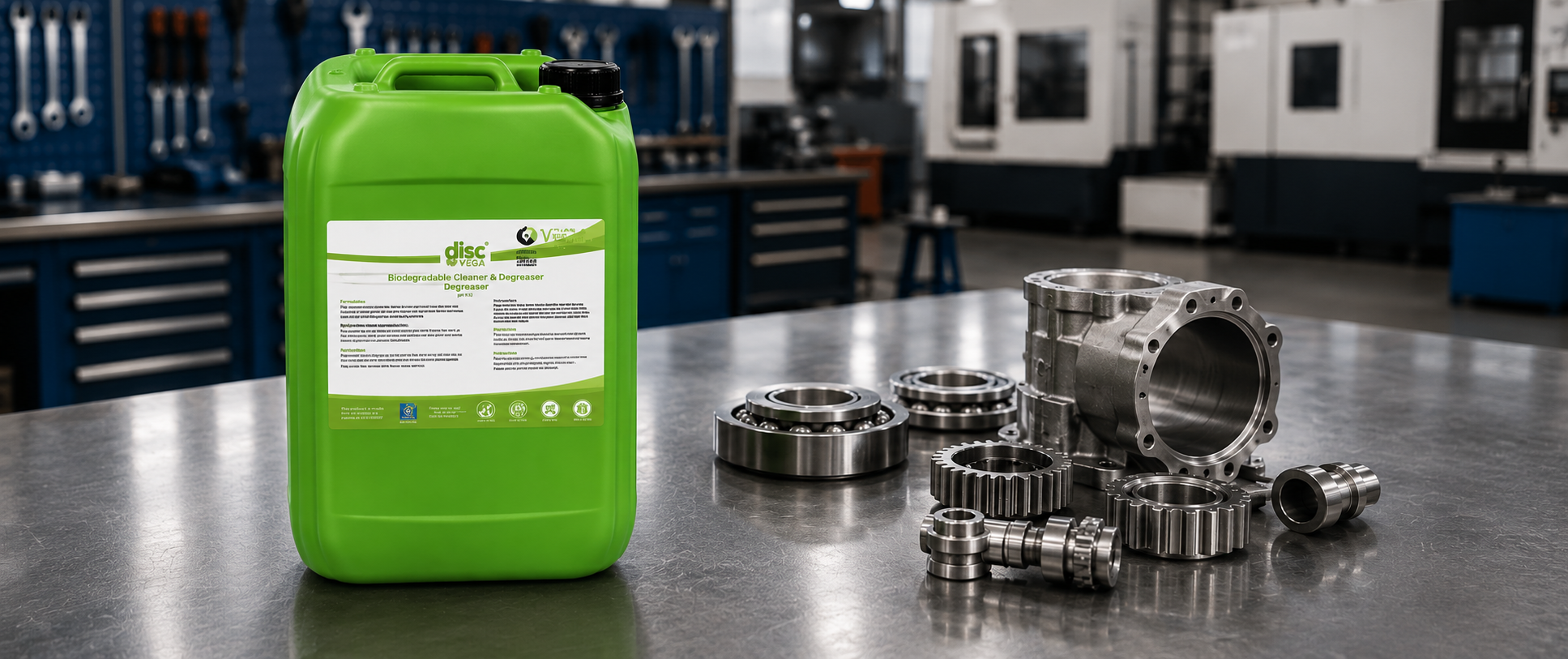
Have you ever wondered what keeps heavy machinery, factory floors, and production equipment clean and free from contamination? The answer in most cases is a degreasing agent. Industrial environments deal with grease, oil, and dirt every day. Without the right cleaning solution, that accumulation causes equipment damage, creates safety hazards, and leads to costly downtime.
The global market for industrial degreasers reached a value of $22.1 billion in 2024 and is projected to grow to $32.3 billion by 2033, with a steady CAGR of 4.1%. That growth reflects how essential degreasing has become in manufacturing, automotive, food processing, aerospace, and pharmaceuticals. Whether you run a small workshop or a large production facility, choosing the right industrial degreaser protects your equipment and ensures operations continue safely. Disc Chemicals provides professional degreasing solutions developed for real industrial demands.
What Exactly Is a Degreasing Agent?
A degreaser is a chemical product developed to break down and remove grease, oil, lubricants, wax, and other water-insoluble substances from hard surfaces. It does this by breaking the bond holding the contaminant to the surface, releasing the residue so it can be rinsed or wiped away.
Degreasers are used on machine parts, conveyor belts, tools, floors, engines, and food-contact surfaces. They are available in liquid form, spray, foam, or concentrate, depending on the application.
How Does an Industrial Degreaser Work?
The science behind a successful degreaser is simple. Most formulas rely on one or more of these mechanisms:
Surfactant Action
Water-based degreasers feature surfactants as their primary component. They contain a hydrophilic side that binds to water and a hydrophobic side that attracts oil. This allows them to surround grease particles, lift them from surfaces, and suspend them in water so they can be easily rinsed away.
Solvent Dissolution
Solvent-based degreasers naturally prefer dissolving oils and greases for emulsification. They work quickly and are powerful against heavy industrial soilings such as hydraulic fluids, lubricating oils, and bitumen.
Alkaline Saponification
Alkaline degreasers react chemically with fats and oils, converting them into water-soluble soaps that rinse clean. Widely used in the food processing and automotive industries, where heavy organic soils represent the biggest challenge.
Enzymatic Breakdown
Enzymatic degreasers use biological enzymes to break down specific types of dirt at the molecular level. They act slower but are highly effective against protein and fat residues, especially in food and beverage facilities.
Types of Industrial Degreasers
Not all degreasers are the same. The right type depends on your surface, contamination type, and environmental requirements.
Water-Based Degreasers
The most common form for industrial use today. Safe for workers, compatible with most surfaces, and easy to remove.
- Low VOC content; complies with European environmental standards.
- Suitable for lines and floors of production areas for general machinery.
- Concentrated formats available to reduce packaging waste.
Solvent-Based Degreasers
Best for heavy-duty applications where speed is important. For stubborn industrial grease and oil.
- Fast evaporation, minimal residue.
- Used in automotive, aerospace, and metalworking.
- Requires proper ventilation and Personal Protective Equipment (PPE).
Bio-Based Degreasers
Derived from plants. An effective degreaser alternative aimed at sustainability without compromising cleaning power.
- Biodegradable and non-toxic.
- Increasingly required under green procurement policies.
- Certified under EU Ecolabel or equivalent standards.
Alkaline Degreasers
High-pH formulas that saponify fats and oils. The preferred degreaser for food processing companies, commercial kitchens, and dairy facilities.
- Effective against baked-on grease and protein residues.
- Safe for stainless steel surfaces.
- Frequently used in Clean-In-Place (CIP) systems.
Where Are Industrial Degreasers Used?
A degreasing agent is required in virtually every industrial sector.
- Automotive and Metalworking: Cutting fluids and lubricants accumulate in engine compartments, brake components, metal parts, and machined surfaces. Regular degreasing prevents corrosion and preserves tolerances.
- Food and Beverage Industry: Fat, protein, and sugar deposits build up quickly on production equipment. Industrial degreasers approved for food-contact environments keep facilities compliant with hygiene regulations.
- Manufacturing and Warehousing: Conveyor systems, forklifts, compressors, and production equipment require regular degreasing to prevent mechanical breakdowns and fire hazards caused by oil buildup.
- Pharmaceuticals and Healthcare: Residue-free surfaces are required for cleanrooms and production equipment. Degreasers used here must meet strict standards for purity and compatibility.
How to Choose the Right Degreasing Agent
Before selecting a product, consider these factors:
- Surface Compatibility: Some degreasers damage plastics, rubber seals, or coated surfaces. Always check the product data sheet.
- Contamination Type: Light oils require a different formula than heavy industrial greases or polymerized residues.
- Application Method: Spraying, wiping, soaking, or foam applications all require different viscosities and dwell times.
- Environmental Regulations: EU REACH and local regulations restrict certain solvents and surfactants. Bio-based or water-based formulas are safer choices.
- Concentration: Concentrated degreasers are initially more expensive, but will drastically lower your cost per use at scale.
Key Takeaways
- A degreasing agent uses surfactants, solvents, enzymes, or alkaline chemistry to remove oils, greases, and contaminants from industrial surfaces.
- Industrial degreasers are available in water-based, solvent-based, bio-based, and alkaline variants.
- Choosing the wrong type can damage surfaces or leave harmful residues.
- Demand for powerful bio-based and water-based degreasers is growing due to stricter EU regulations.
- The right industrial degreaser protects your equipment, reduces downtime, and keeps your facility compliant with regulations.
Frequently Asked Questions
What is the difference between a degreaser and a general cleaner?
A general cleaner removes surface dirt and dust. A degreasing agent is specifically formulated to remove oil, grease, and lubricants that water and standard cleaners cannot dissolve. Industrial degreasers utilize powerful chemical processes such as surfactant action, solvency, or alkaline chemistry.
Can I use an industrial degreaser on food-contact surfaces?
Yes, but only if the product is approved for use on food-contact surfaces. Look for NSF A1 certification or equivalent credentials.
Are powerful degreasers safe for workers?
Modern water-based and bio-based formulas are significantly safer than older solvent-based products. Always check the SDS (Safety Data Sheet) for requirements regarding Personal Protective Equipment (PPE), ventilation, and first-aid measures. Solvent-based degreasers still require gloves, eye protection, and proper ventilation.
Conclusion
Understanding how a degreaser works helps you make smarter choices and run processes more efficiently. The right industrial degreaser protects your equipment, reduces maintenance costs, and keeps your facility safe and compliant. Whether you need a heavy-duty degreaser for heavy machinery or a mild bio-based product for food environments, Disc Chemicals has the right solution. Explore the full range of industrial degreasers from Disc Chemicals and find the right formula for your business operations.