Manufacturing floors run on machinery, and machinery runs on oil, grease, and metal residue that build up fast. Finding suitable cleaning products for industry is more than just aesthetics because it impacts the life of a machine, the safety of the worker and the regular running of production. A degreaser that struggles against heavy-duty grime slows down maintenance teams and increases downtime across the plant floor.
With dozens of degreaser formulas on the market, facility managers often ask the same question: which industrial degreaser actually holds up in a heavy manufacturing environment? This guide breaks down the main types of degreasers, what to check before you buy industrial cleaner in bulk, and why more facilities across Europe now rely on DISC Chemicals for consistent, dependable results.
Why Manufacturing Facilities Need Specialized Degreasers
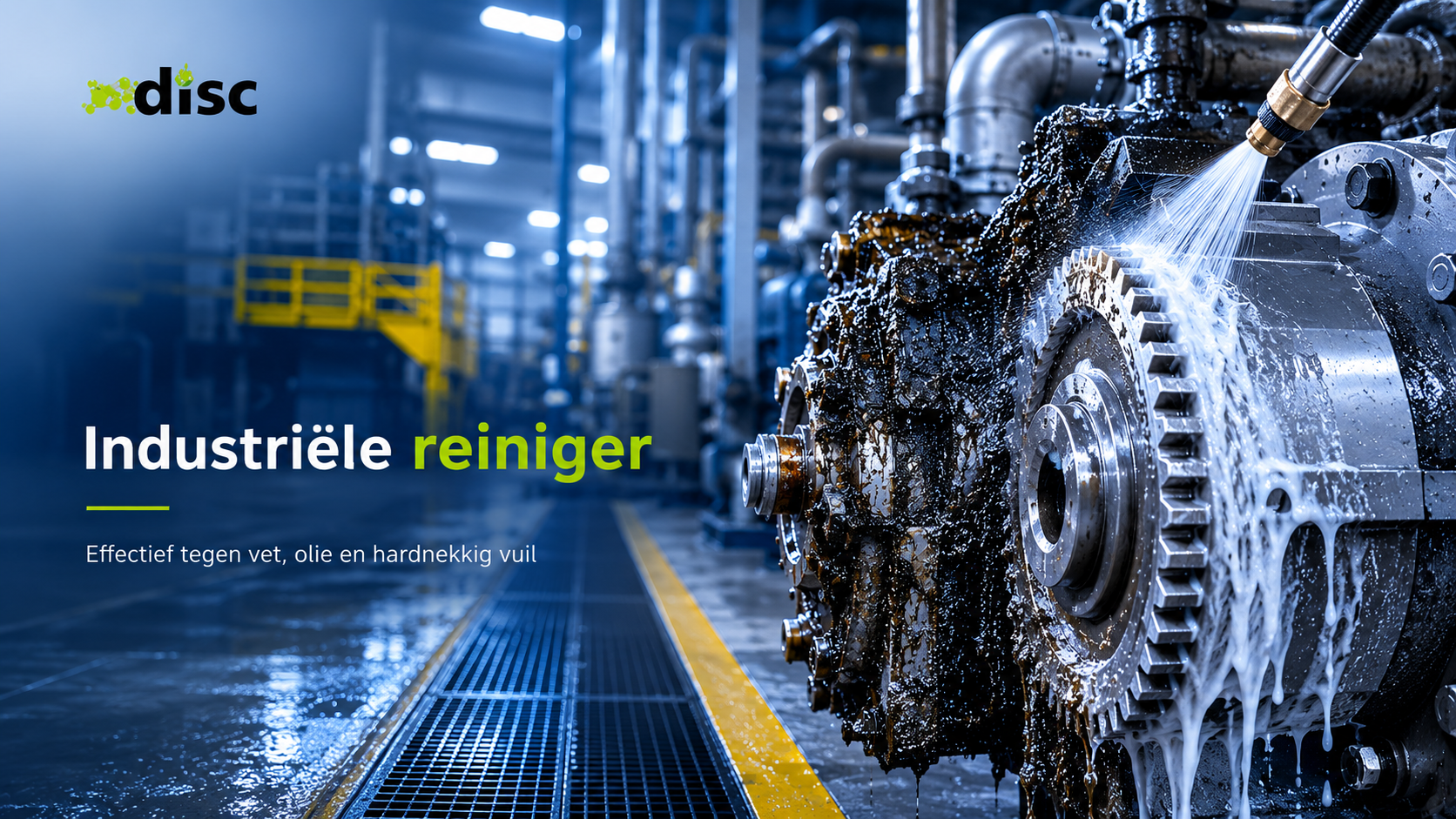
Household cleaners are not suitable for the heavy duty type of cleaning done in industries. Manufacturing equipment accumulates a mixture of dried-up oils, a residue of hydraulic fluids, and carbon dirt which standard cleaning agents are not capable of removing. A degreaser formulated for factory use needs to cut through this buildup without damaging metal surfaces, rubber seals, or protective coatings.
Beyond performance, safety compliance matters. Facilities where food is processed, or automobile components, or microchips are assembled and packaged have to adhere to high hygiene and chemical-handling standards. The wrong formula can create compliance headaches and, worse, safety incidents on the floor. This is why plant managers treat sourcing decisions around cleaning products for industry as a safety investment, not just a maintenance expense.
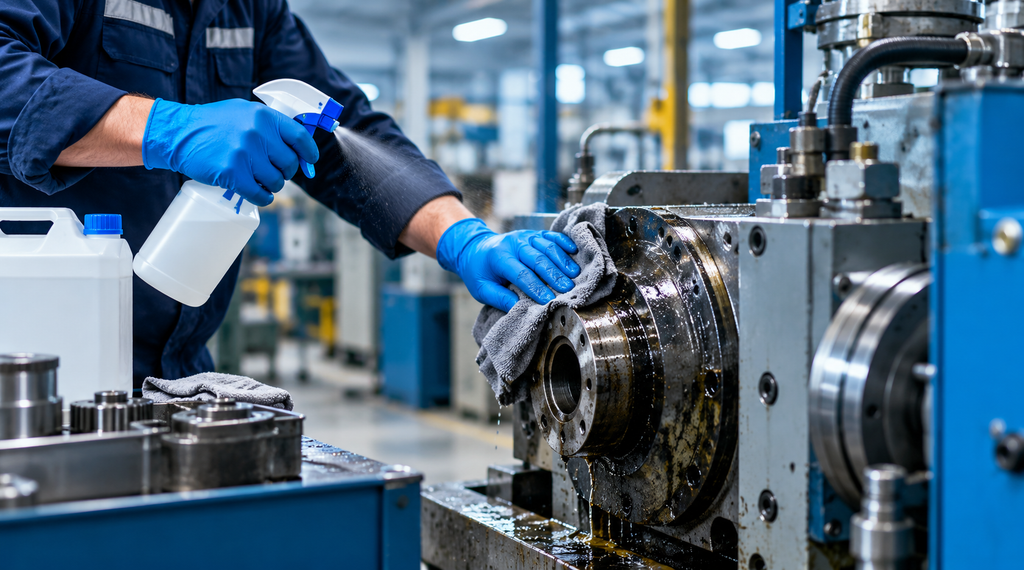
Types of Cleaning Products for Industry Manufacturing Teams Rely On
There are three broad categories of degreasers commonly used across production facilities:
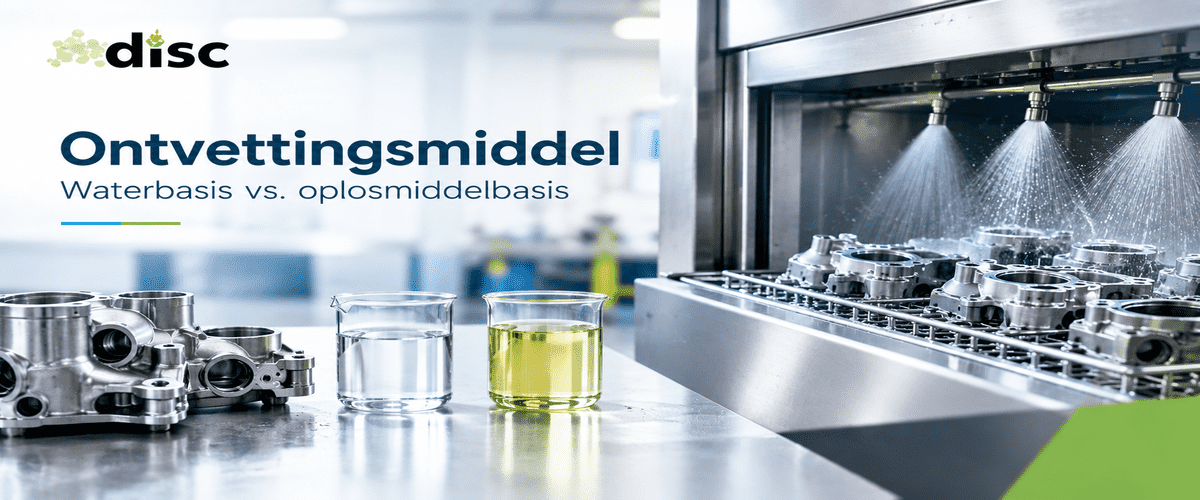
- Solvent-based degreasers: It is able to strip off thick greasy substances and oils in a very short time so they are mainly used on parts of automobiles and metal products. Solvents evaporate fast but a well-ventilated place is needed.
- Water-based degreasers: They pose less indoor air quality risks and surface damage so they are often a good alternative in places where limiting worker exposition is the top priority and a less potent smell is also a factor.
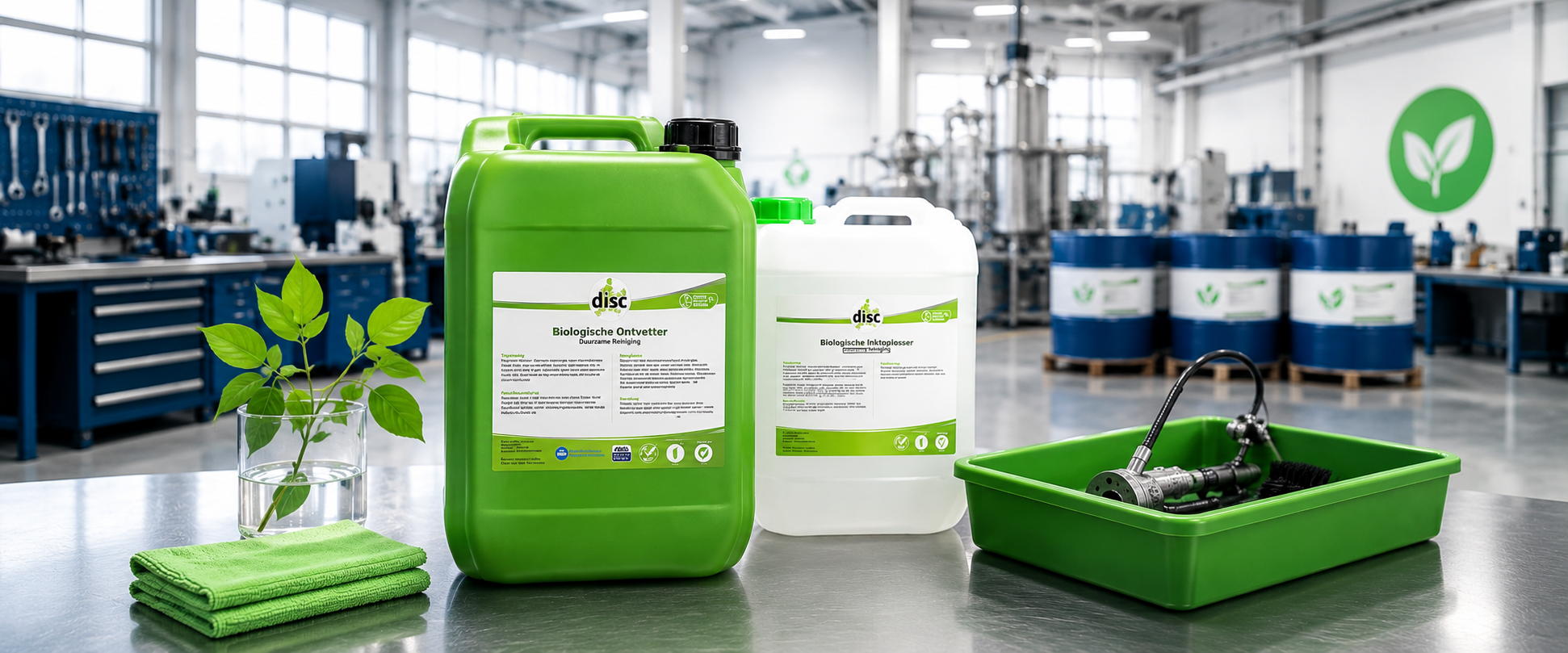
- Bio-based or enzymatic degreasers: They help in the decomposition of organic matter in a slow manner, hence they are preferred by facilities that are trying to decrease VOC emission and lower the contamination of their wastewater.
Depending on the type of equipment, the nature of the industry the place is working and the environmental regulations in the locality each type can be selected in such a way the most suitable one is employed.
A Growing Safety Focus in Manufacturing
Demand for effective, compliant plant cleaning solutions isn’t slowing down. According to the U.S. Bureau of Labor Statistics, private industry employers have reported 2.5 million nonfatal workplace injuries and illnesses, which is the lowest number in this data series since 2003. It shows that manufacturing is one of the sectors most at risk of handling chemicals. So, this improvement probably results from the wider use of safer, better-formulated degreasers and the implementation of more restrictive handling protocols.
That’s why sourcing dependable cleaning products for industry from a supplier who understands chemical safety data sheets, VOC limits, and surface compatibility matters as much as raw cleaning power.
What to Check Before You Purchase an Industrial Degreaser
Not every degreaser labeled “industrial strength” performs equally. Before you buy industrial cleaner for your facility, check for:
- Compatibility with the metals, plastics, and coatings in your equipment
- Cutting power measured against your heaviest grease and oil buildup
- Compliance documentation, including SDS sheets and REACH or local chemical regulations
- Concentration ratios, since diluted-strength products mean more frequent restocking and higher long-term costs
- Environmental impact, particularly if your plant is working toward lower VOC or biodegradable formulations
Suppliers who provide full technical documentation alongside their degreasers make it easier for procurement and safety teams to verify a product before it ever reaches the shop floor.
Why DISC Chemicals Stands Out for Manufacturing Facilities
Disc Chemicals has become known for supplying industrial degreasers and descalers, along with all sorts of cleaning products for industry use across food processing, automotive, and metalworking sectors. Our products have been formulated to remove even the toughest of grease without damaging the sensitive machine parts. We also have a wide range of products that include ones that are solvent-based and others that are based in water, and these different formulations would be chosen according to the particular facilities requirements.
What sets this company apart is technical support: their team helps facilities match the correct degreaser to specific equipment and compliance requirements before a single drum ships out. For plant managers who want to buy industrial cleaner without guessing on formulation strength, that consultative approach reduces trial-and-error costs significantly.
Key Takeaways
- Industrial degreasers must handle heavy grease, oil, and carbon buildup that household cleaners can’t touch.
- Different types of degreaser such as solvent-based, water-based, and bio-based ones are recommended for different sorts of manufacturing environments.
- As per the BLS statistics, non-fatal work injuries have reached their lowest level since two decades, one of the explanations being the implementation of safety handling and usage of chemicals.
- Check compatibility, concentration, and compliance documentation before purchasing a new degreaser.
- A supplier with strong technical support and a broad catalog reduces trial-and-error costs for manufacturing facilities of any size.
Conclusion
Choosing a degreaser is a decision of paramount importance as such a product will be used throughout the entire manufacturing process – from equipment life extension to worker safety and even compliance issues. Whether your facility needs solvent-based power or a gentler water-based formula, investing in quality cleaning products for industry pays off in fewer breakdowns and safer working conditions. For facilities ready to upgrade their chemical supply chain, DISC Chemicals offers a proven, technically supported catalog built for real manufacturing demands.
FAQs
1. What’s the difference between a degreaser and a general cleaner?
Degreasers specialize in dissolving oil and heavy dirt such as carbon residue, whereas general cleaners target less stubborn soils and dust.
2. Are solvent-based degreasers safe for indoor use?
These solvents can safely be applied indoors where there is good airflow. Some operations though still go for a water-based choice to minimize emissions in indoor areas.
3. How often should manufacturing equipment be degreased?
It is mostly a function of operating conditions. Usually, however, maintenance teams opt for a weekly degreasing or post-heavy production.
4. Can I use the same degreaser for food-processing and automotive equipment?
Not really – as the standards for the food industry require the use of non-toxic, certified products, whereas the auto shops can afford to use the strong solvent-based ones even though such might have a negative impact on human health.
5. Where can I buy industrial cleaners suited to my facility’s equipment?
For example, DISC Chemicals is one of the companies selling chemicals that will recommend the solution matching the type of machinery and the industry in which a company operates.