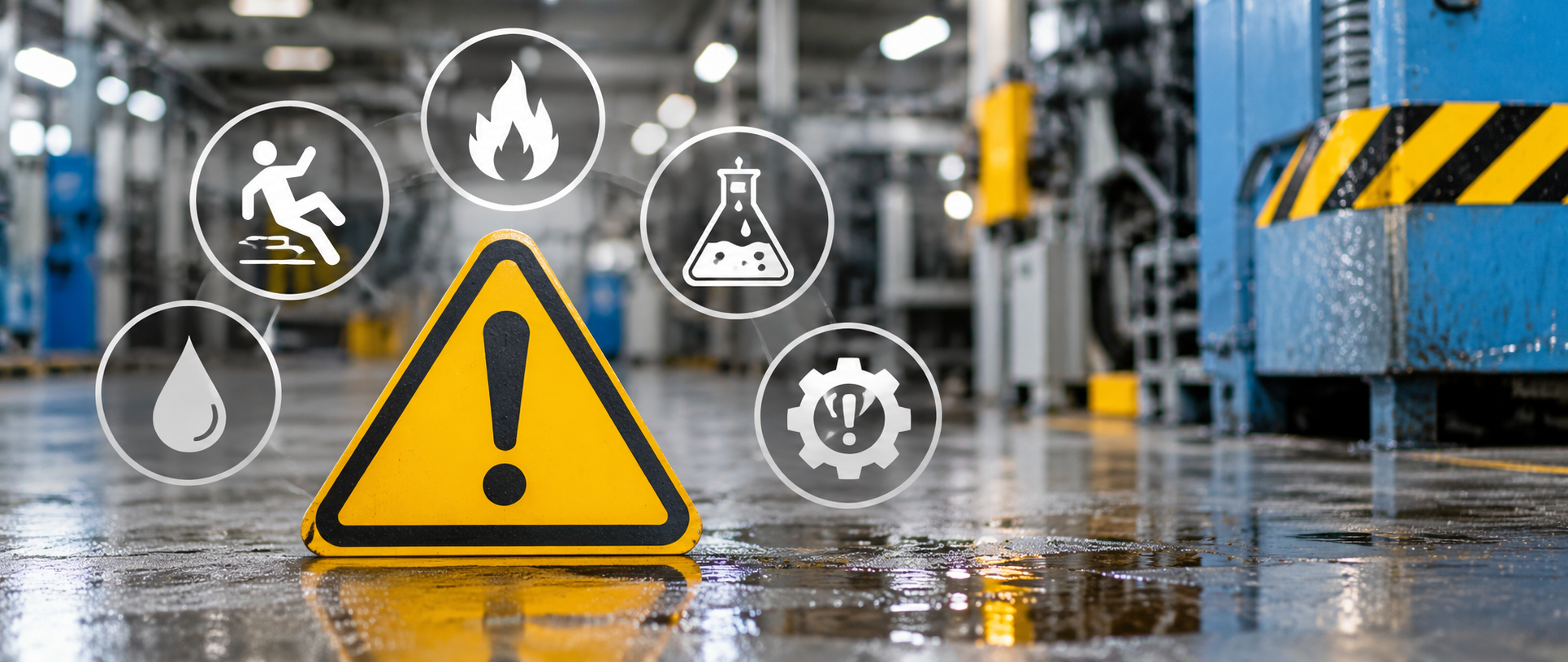
An oil leak from a machine, accumulated metal dust or the improper use of a degreaser can create safety risks in manufacturing facilities. However, these hazards are not always identified in time during day-to-day operations.
Industrial cleaning contributes to a safer working environment when the right cleaning products, equipment and procedures are used. It involves more than removing contamination. It also means minimising exposure to hazardous substances and ensuring that maintenance activities are carried out safely.
Which risks deserve particular attention, and what practical measures can businesses take to reduce them? Below, we explore five common workplace hazards and provide a practical safety checklist.
What Are the Main Safety Risks Associated with Industrial Cleaning?
Safety risks vary depending on the production environment, type of contamination and cleaning method. The table below outlines common hazards and suitable preventive measures.
| Safety risk | Possible cause | Preventive measure |
| Slips and falls | Oil, grease or metalworking fluids on floors | Repair leaks promptly and use suitable floor cleaning products |
| Hidden defects | Contaminated machinery and seals | Regular cleaning and visual inspections |
| Fire hazards | Accumulated combustible oil, grease or dust | Remove deposits safely and control ignition sources |
| Exposure to hazardous substances | Inhalation of vapours or aerosols, skin contact | Assess less hazardous alternatives and implement appropriate protective measures |
| Material damage | Unsuitable cleaning chemicals or temperatures | Check material compatibility and product instructions |
An effective cleaning strategy helps control these hazards as close to their source as possible. Removing contamination complements preventive maintenance and other workplace safety measures.
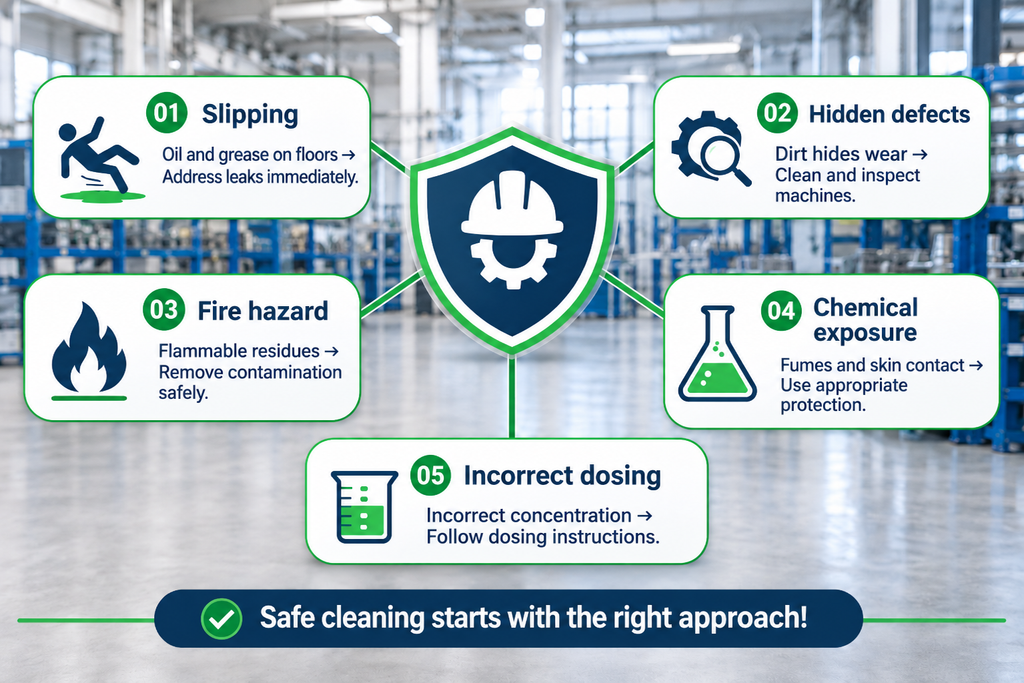
1. Prevent Slips Caused by Oil and Grease
Oil and metalworking fluids can spread across production floors through machinery, footwear and industrial vehicles. As a result, walkways outside the immediate production area may also become slippery.
Effective cleaning requires more than loosening oil and grease. Contamination and cleaning residues must also be properly removed. Incorrect dosing or insufficient rinsing can leave residues that increase slip risks.
Practical measure: Regularly inspect areas surrounding machinery, repair leaks at their source and use cleaning products suitable for the flooring material. After cleaning, check that the surface is safe to walk on.
2. Identify Wear and Leaks at an Earlier Stage
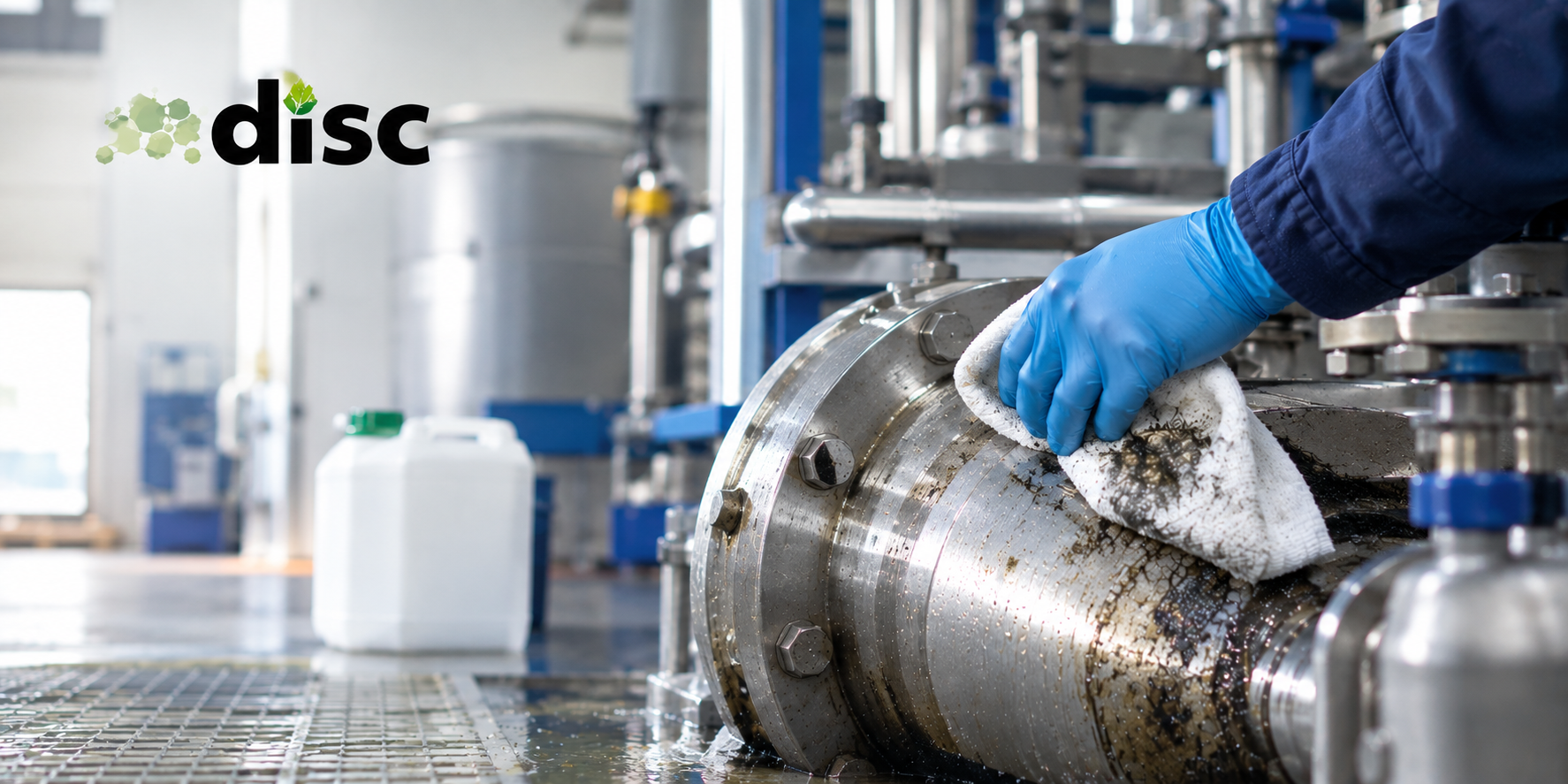
Accumulated grease and dirt can conceal damaged seals, early signs of leakage and other signs of deterioration.
Regular machine cleaning makes visual inspections easier and improves access to inspection points. This is particularly useful for hydraulic systems and machinery with moving components.
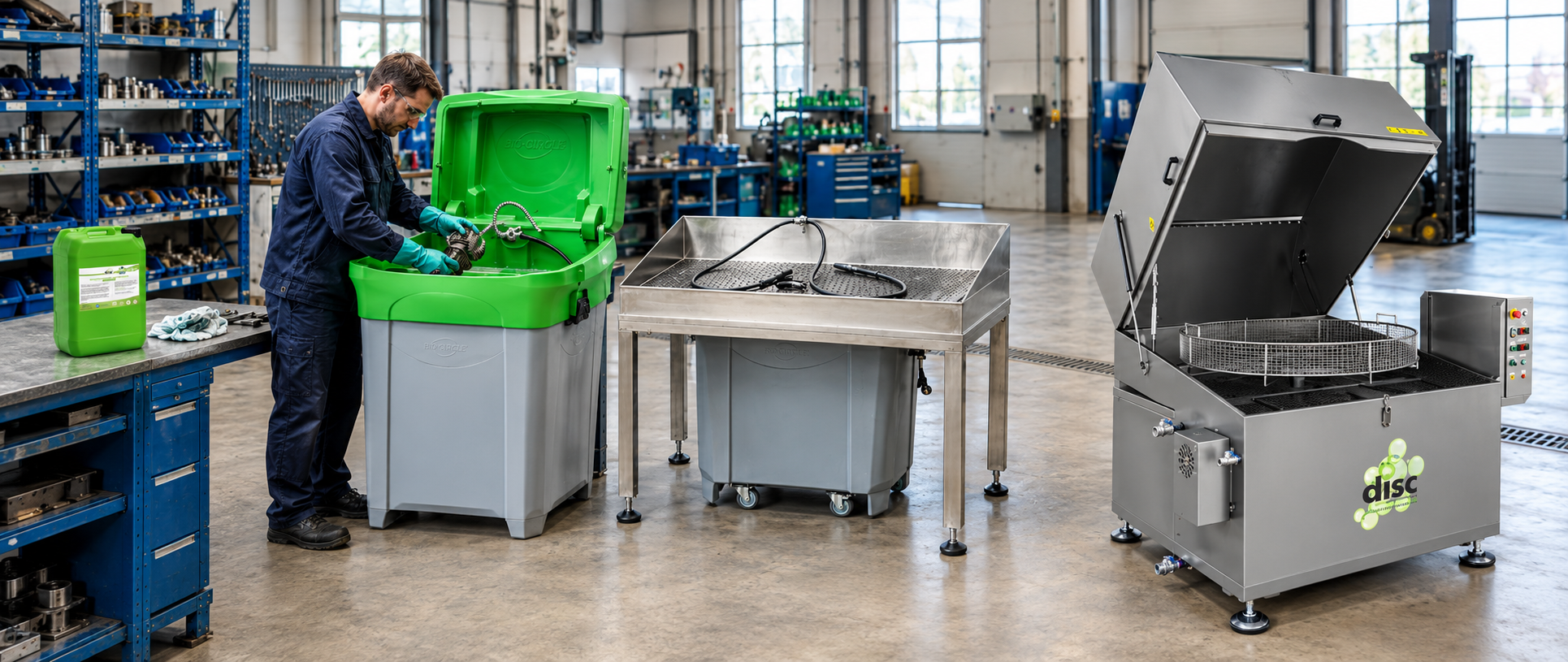
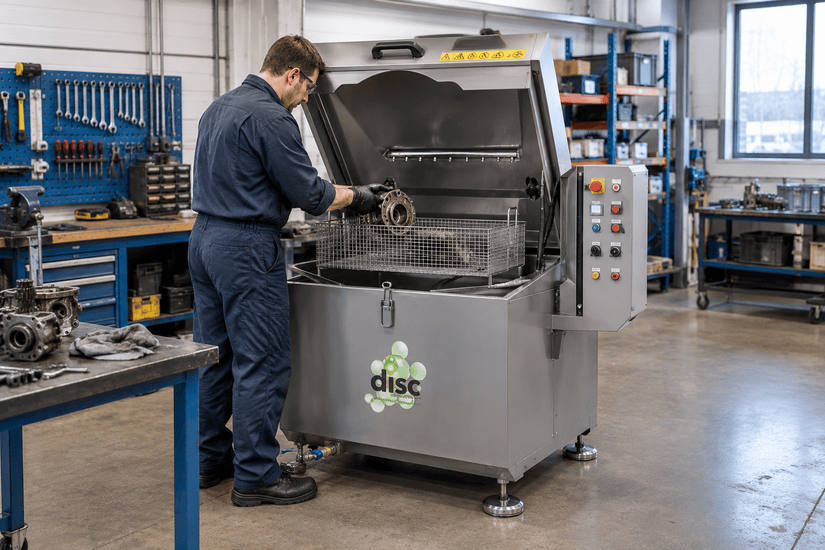
For smaller machine components, a manual parts washer may be suitable. One example is the Bio-Circle GT Compact Parts Washer, which allows operators to clean components manually using a brush and a temperature-controlled, water-based cleaning solution.
This allows operators to remove oil and grease deposits effectively, making component surfaces easier to inspect.
The most suitable cleaning system depends on the material, type of contamination and required cleaning results.
3. Reduce Exposure to Hazardous Cleaning Chemicals
Industrial contamination is not the only potential hazard. The cleaning chemicals themselves may also present health and safety risks.
Some solvent-based degreasers are flammable or may cause harmful exposure through skin contact or inhalation if used incorrectly.
When selecting industrial cleaning products, businesses should therefore consider more than cleaning performance alone.
Review the safety data sheet (SDS), ventilation requirements, personal protective equipment (PPE) and recommended dilution ratios.
Water-based or biodegradable cleaning products may offer a less hazardous alternative in certain applications. However, biodegradability does not automatically mean that a product is safe for workers or materials.
The choice between water-based and solvent-based cleaners depends on the application, contamination and safety requirements. For further guidance, read our article on the differences between water-based and solvent-based degreasers.
Practical measure: Assess whether a cleaning product with a more favourable hazard profile can achieve the same cleaning results. Compare its chemical composition, operating conditions and technical performance before making a decision.
Further information on managing hazardous substances in the workplace is available from EU-OSHA.
4. Reduce Fire Risks from Combustible Deposits
Combustible oil and grease residues, as well as certain types of combustible dust, can increase fire risks under unfavourable conditions. If combustible dust becomes airborne, an explosive atmosphere may also develop under certain circumstances.
Deposits around hot machine components, electrical installations and potential ignition sources require particular attention.
A structured cleaning schedule helps prevent excessive accumulation of these residues. However, the cleaning method must be suitable for the equipment and substances involved.
Practical measure: Include high-risk areas in the maintenance schedule and ensure that cleaning activities do not introduce additional hazards. For example, avoid using flammable cleaning agents near ignition sources.
Where combustible dust is present, cleaning methods must be selected according to the workplace risk assessment.
Industrial cleaning supports fire prevention but does not replace engineering controls or formal fire and explosion risk assessments.
5. Avoid Safety Risks Caused by Incorrect Dosing
Using a higher concentration of cleaning solution does not necessarily improve cleaning performance.
Overdosing can increase product consumption and, depending on the formulation, create unnecessary risks for workers or materials. Conversely, insufficient concentration may reduce cleaning effectiveness.
Temperature, contact time and cleaning method also influence performance.
Practical measure: Follow clear dosing instructions and adjust concentration, temperature and contact time according to the manufacturer’s recommendations and the type of contamination.
Practical Industrial Cleaning Safety Checklist
A structured cleaning procedure helps businesses manage safety risks consistently. Use the following checklist before, during and after cleaning activities.
Before Cleaning
- Has the type of contamination been identified?
- Is the cleaning product suitable for the material and application?
- Are the safety data sheet and dosing instructions available?
- Has the machinery been safely shut down and isolated to prevent unexpected start-up?
- Are adequate ventilation and the required personal protective equipment available?
During Cleaning
- Are the recommended concentration and temperature being maintained?
- Are splashes, the formation of vapours and aerosols, and unnecessary skin contact being minimised?
- Are contaminated cleaning fluids collected and handled in accordance with applicable regulations?
After Cleaning
- Have contamination and cleaning product residues been adequately removed?
- Are floors and work surfaces safe to use again?
- Have leaks, wear and other abnormalities been checked?
- Have used cleaning materials and waste been disposed of correctly?
Integrating these checks into daily operations makes industrial cleaning a more controlled part of workplace safety and maintenance.
Which Industrial Cleaning Products Are Suitable for a Safer Workplace?
Not every application requires the same cleaning chemistry. Cleaning a production floor, for example, involves different requirements from degreasing machine components.
When selecting industrial cleaning products, four factors should guide the decision: the type of contamination, material compatibility, cleaning method and safety requirements.
DISC Special Chemicals supports businesses in selecting suitable cleaning products and systems for industrial maintenance, metalworking and the removal of oil and grease deposits.
Where possible, less hazardous alternatives are considered without compromising the cleaning performance required for the application.
Would you like to know which industrial cleaning products or cleaning methods are suitable for your facility? Contact DISC Special Chemicals for advice tailored to your specific application.
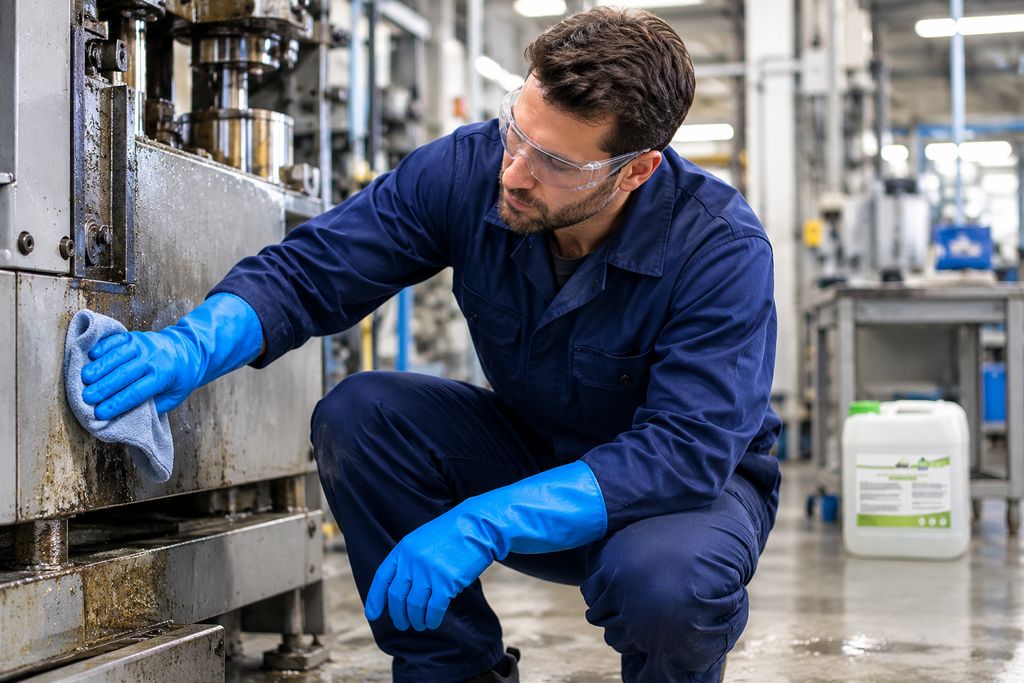
Conclusion: Safer Industrial Cleaning Starts with the Right Approach
Industrial cleaning can help reduce several workplace safety risks, including slippery floors, hidden wear and damage, combustible deposits and exposure to hazardous chemicals.
The most effective approach combines suitable cleaning products, clear operating procedures and regular inspections.
By integrating cleaning into workplace safety and preventive maintenance programmes, manufacturing businesses can identify hazards earlier and manage operational risks more effectively.
Frequently Asked Questions
1. What is the most important consideration for safe industrial cleaning?
The combination of a suitable cleaning product and a safe cleaning procedure. Before starting, assess the contamination, material compatibility, safety data sheet and required protective measures.
2. Are water-based industrial cleaners safer than solvent-based products?
Water-based cleaners may have a more favourable hazard profile in certain applications. However, actual safety depends on the complete formulation and operating conditions.
3. How often should industrial machinery be cleaned?
Cleaning frequency depends on equipment usage, contamination levels, maintenance requirements and workplace hazards. A risk-based cleaning schedule is generally more effective than applying the same interval to every machine.