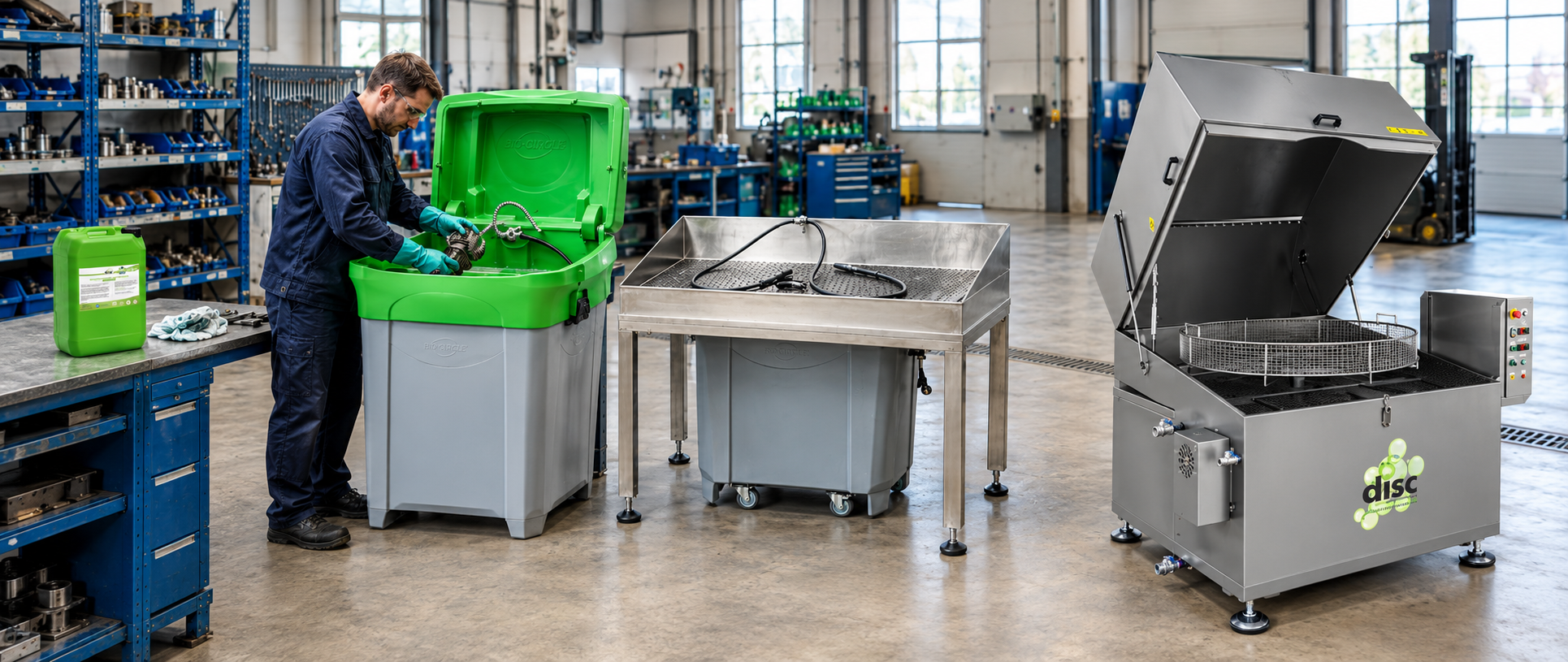
A parts washer is used in industrial maintenance to remove oil, grease, lubricants, and other contaminants from machine components. Its purpose goes beyond simply cleaning surfaces: proper parts cleaning prepares components for accurate inspection, repair, and reuse.
Contamination can conceal damage or cause problems during reassembly. Cleaning components at the right stage of maintenance helps technicians identify wear more accurately and reduce the risk of errors during maintenance operations.
But when is parts cleaning actually necessary? And how can you determine whether a component is clean enough for the next maintenance step?
What Role Does a Parts Washer Play in Industrial Maintenance?
During maintenance and repair operations, machines are regularly disassembled so individual components can be inspected, repaired, or replaced. Throughout operation, these components accumulate lubricating oil, grease, metal particles, and manufacturing residues.
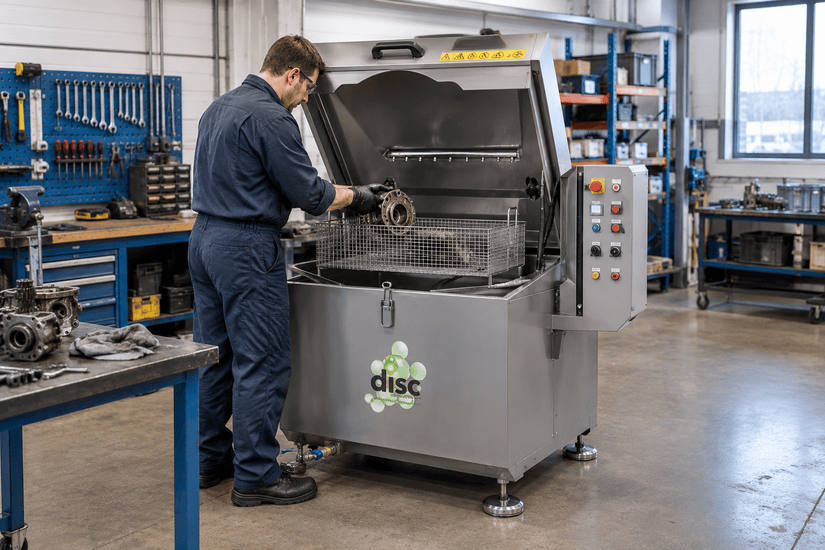
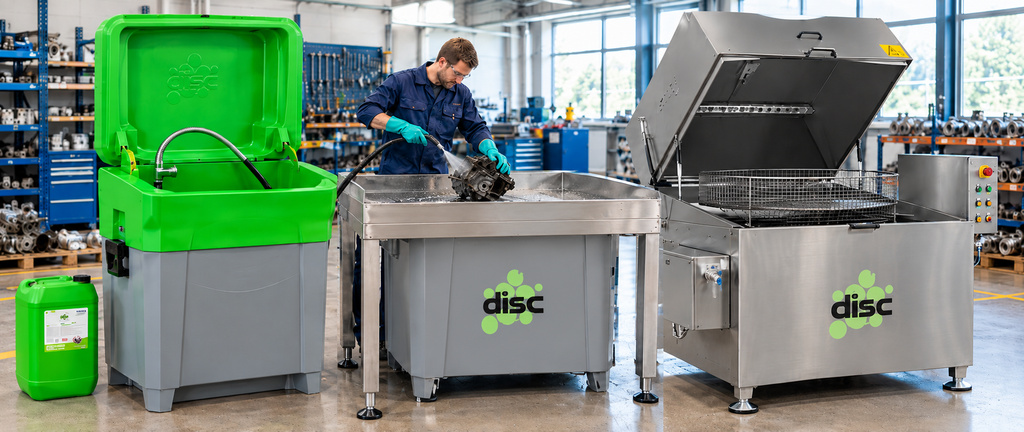
A parts washer provides a dedicated cleaning station where contaminants can be removed before components undergo further processing. In workshops, manual parts washers are particularly useful for cleaning individual components before inspection or repair.
The purpose of cleaning varies depending on the maintenance stage:
| Maintenance stage | Purpose of parts cleaning |
| Before inspection | Remove contamination so wear and damage become easier to identify |
| Before repair | Eliminate oil and grease residues that may interfere with coating or bonding |
| Before assembly | Remove unwanted contaminants that could enter the repaired system |
| During refurbishment | Prepare reusable components for inspection and further processing |
A parts washer is therefore more than cleaning equipment. It also supports quality control throughout industrial maintenance operations.
Why Should Machine Components Be Cleaned Before Inspection?
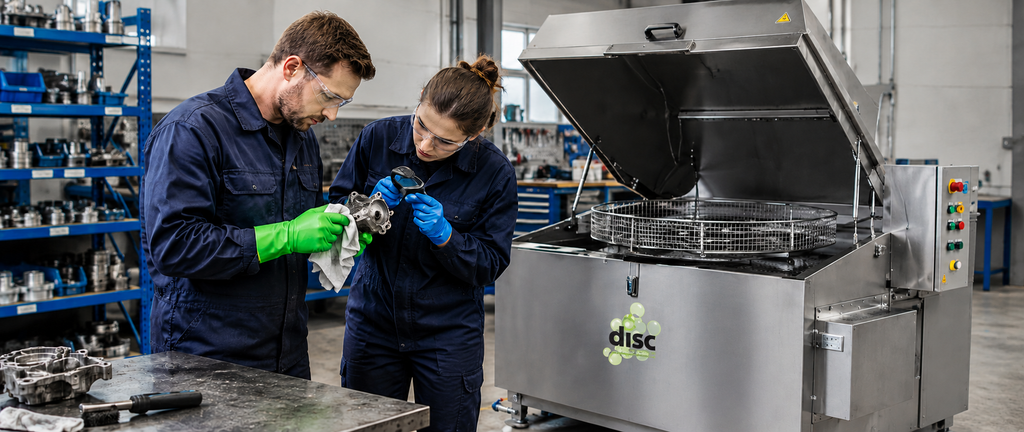
One of the main reasons for using a parts washer is to improve the assessment of a component’s actual condition.
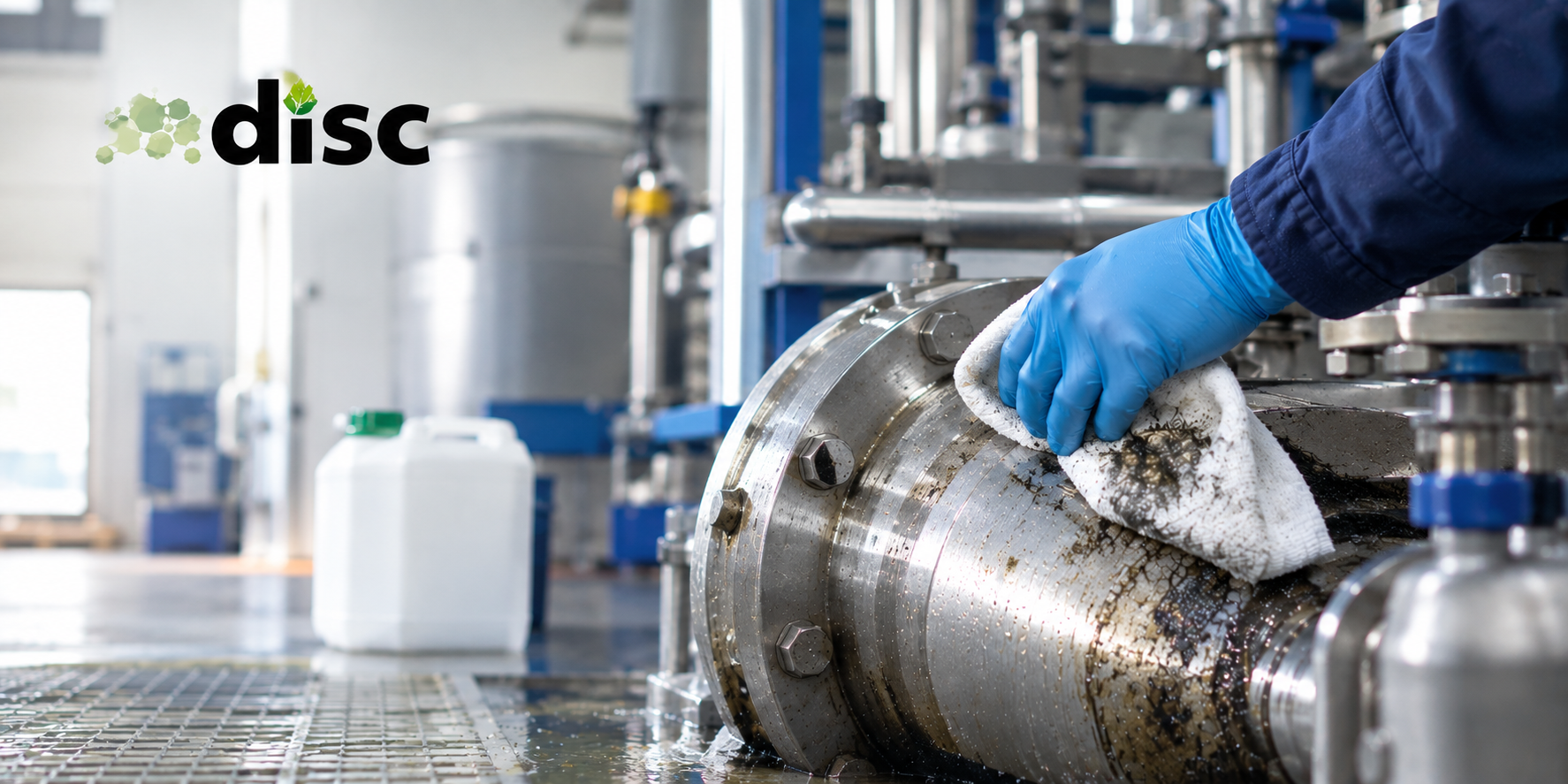
Oil, grease, and stubborn deposits can conceal minor defects. As a result, a component may appear undamaged during an initial visual inspection, even though corrosion or wear has already developed beneath the contamination.
Common examples include:
- Gears: Hardened grease can conceal wear on gear teeth.
- Shafts: Oil residues can make surface damage and corrosion more difficult to detect.
- Machine housings: Contamination may hide cracks, leakage marks, and damaged sealing surfaces.
- Hydraulic components: Deposits around connections and seals can interfere with condition assessments.
Companies that regularly clean machine parts should therefore incorporate cleaning into their inspection procedures.
Once contamination has been removed, maintenance technicians can make better-informed decisions about whether a component should be repaired, replaced, or reused.
DISC practical tip: Clean components before conducting a detailed visual inspection. If cracks are suspected, use an appropriate inspection method. A clean surface improves visibility but does not rule out hidden defects.
What Happens When Parts Are Not Properly Cleaned Before Repair or Assembly?
Insufficient cleaning can negatively affect subsequent maintenance operations.
When applying coatings or adhesives, remaining oil and grease can reduce adhesion. Contamination may also affect the quality of certain welding processes.
During assembly, it is equally important to prevent unwanted particles from entering sensitive mechanical systems.
Consider the refurbishment of a hydraulic system. If dirt particles enter the system during assembly, they may damage sensitive components or cause operational failures.
A suitable parts washer helps remove contamination before these processes begin. However, applications with particularly strict cleanliness requirements may need additional rinsing, drying, or precision-cleaning procedures.
Important: A component that looks clean does not necessarily meet the technical cleanliness requirements of every industrial application.
How Can Parts Cleaning Be Integrated Into Preventive Maintenance?
In many industrial facilities, components are only cleaned once they become heavily contaminated. However, incorporating parts cleaning into preventive maintenance schedules can provide additional benefits.
The objective is to inspect components under consistent conditions and prevent excessive contamination from accumulating.
A structured approach involves four steps:
- Identify critical components: Determine which machine parts require regular inspection and where contamination could interfere with accurate assessments.
- Define cleaning intervals: Schedule cleaning during planned disassembly, refurbishment, or before specific inspection procedures.
- Standardize cleaning procedures: Establish appropriate cleaning concentrations, contact times, and methods for each component.
- Verify cleaning results: Check whether components are sufficiently clean and dry before proceeding to the next maintenance stage.
Standardized procedures make cleaning results more consistent and repeatable.
This is particularly valuable when multiple technicians perform similar maintenance activities or different workshop departments contribute to the same maintenance process.
When Is a Machine Component Clean Enough?
A common misconception is that a component is sufficiently clean once no visible grease remains.
For basic maintenance tasks, visual inspection may be adequate. However, technically demanding applications often require stricter cleanliness standards.
The required level of cleanliness depends on what happens to the component after cleaning.
| Next maintenance step | Important cleanliness requirement |
| Visual inspection | Contamination must not conceal relevant damage |
| Coating or bonding | Surfaces must meet adhesion and preparation requirements |
| Mechanical assembly | No unwanted cleaning residues or loose contaminant particles |
| Hydraulic refurbishment | Compliance with specified technical cleanliness requirements |
| Storage after cleaning | Adequate drying and corrosion protection where necessary |
For less critical applications, visual inspection or a clean-wipe test may be useful. Sensitive components may require additional testing for surface contamination or residual particles.
DISC practical tip: Define the required cleanliness level before cleaning begins. This helps prevent both unnecessarily intensive cleaning and components being returned to service without meeting the necessary requirements.
How Can You Reduce Cleaning Chemical Consumption?
Efficient industrial parts cleaning is not only about how quickly components become clean. The consumption of cleaning chemicals, water, and the amount of waste generated also affect operating costs.
One common source of inefficiency is treating every component in exactly the same way, regardless of the type or amount of contamination.
A lightly contaminated component does not necessarily require the same cleaning treatment as a part covered in hardened grease deposits.
Three measures can help improve efficiency:
- Remove heavy contamination first: Mechanically removing thick grease layers and loose deposits before washing reduces the amount of contamination entering the cleaning solution.
- Use the correct chemical concentration: Higher concentrations do not automatically produce better cleaning results. Follow the manufacturer’s recommended dilution ratios.
- Minimize cleaning solution losses: Where the cleaning procedure allows, let components drain above the cleaning tank to recover excess liquid.
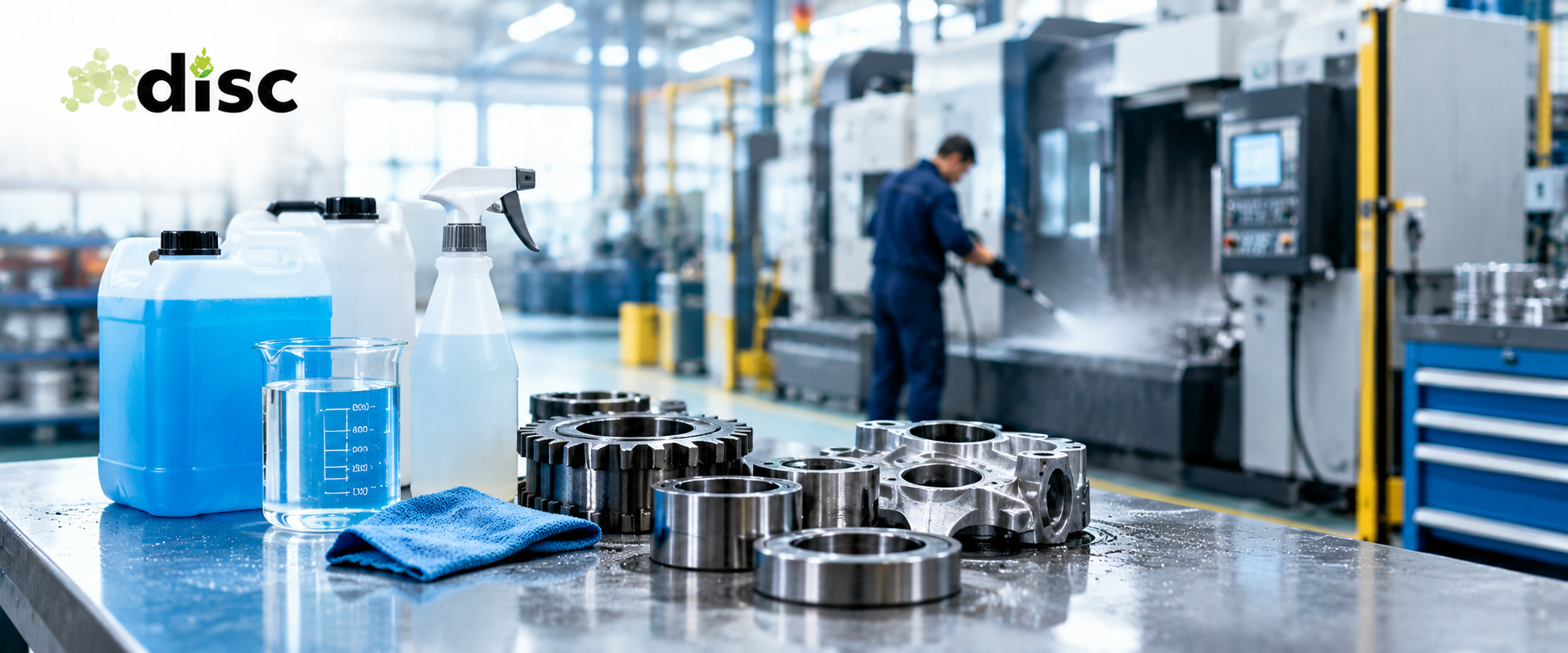
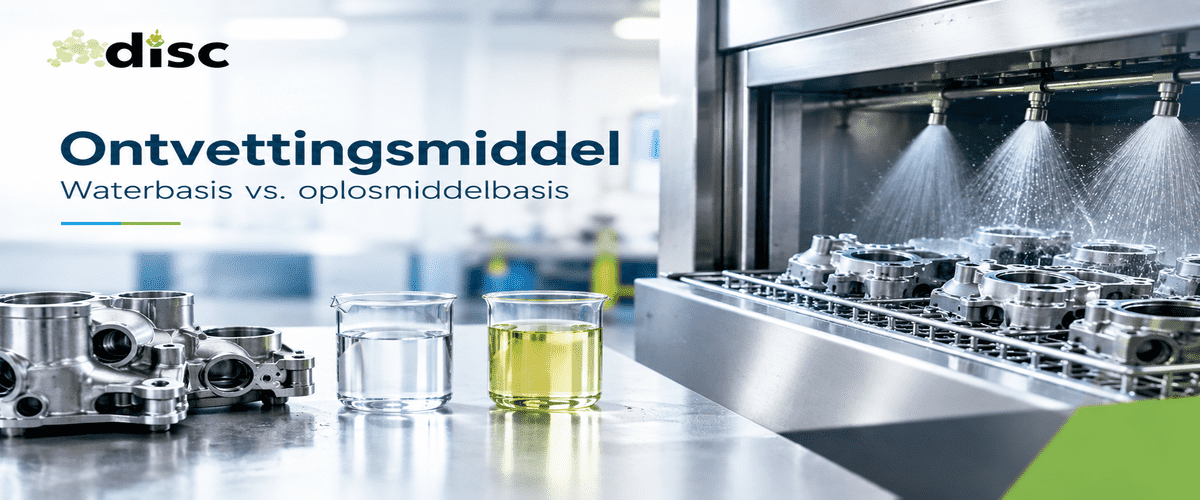
Selecting the right cleaning chemistry is equally important. For many industrial applications, water-based, biodegradable cleaners are available that can replace traditional solvent-based products.
DISC Special Chemicals offers a range of industrial degreasers designed to remove oil, grease, and other industrial contaminants.
When selecting a cleaning product, consider material compatibility, contamination type, and the required cleaning performance.
Biodegradability does not automatically mean that used cleaning solutions can be discharged or disposed of without further assessment.
How Can You Measure the Cost-Effectiveness of a Parts Washer?
When selecting and operating parts cleaning equipment, businesses should look beyond the initial purchase price and the cost of cleaning chemicals.
The more important question is how reliably and efficiently the cleaning process supports overall maintenance operations.
Workshop managers can evaluate performance using several practical indicators:
| Performance indicator | What does it measure? |
| Cleaning time per component | Labor required for each cleaning operation |
| Percentage of components requiring re-cleaning | Consistency and reliability of cleaning results |
| Cleaning solution consumption | Efficiency of chemical usage |
| Defects identified after cleaning | Damage detected during subsequent inspection |
| Rework caused by contamination | Whether remaining contamination affects later maintenance stages |
Monitoring these indicators over time helps identify opportunities for improvement.
In some cases, adjusting chemical concentration, improving work instructions, or selecting a more suitable cleaning agent may deliver greater benefits than replacing existing equipment.
Conclusion: Why a Parts Washer Is Essential for Reliable Industrial Maintenance
The purpose of a parts washer extends far beyond removing visible dirt and grease.
A structured cleaning process supports accurate inspections, reduces the risk of contamination during repair and assembly, and improves the consistency of maintenance operations.
The greatest value comes from matching the cleaning process to the requirements of the next maintenance step.
Not every component requires the same cleaning intensity. What matters is achieving the appropriate level of technical cleanliness for its intended application.
DISC Special Chemicals supports industrial businesses in selecting suitable cleaning chemicals and parts washing equipment for different maintenance and refurbishment processes.
Key Takeaways
- IMPROVED INSPECTION: A parts washer removes contamination that can conceal wear, corrosion, and surface damage.
- RELIABLE REPAIRS: Clean components help prevent problems during surface treatment, repair, and assembly.
- PREVENTIVE MAINTENANCE: Scheduled cleaning procedures make maintenance activities more predictable and manageable.
- TECHNICAL CLEANLINESS: The required cleanliness level depends on the next maintenance stage, not simply the appearance of the component.
- COST-EFFECTIVE CLEANING: Pre-cleaning, correct chemical dosing, and controlled solution consumption can reduce unnecessary operating costs.
Frequently Asked Questions About Industrial Parts Washers
1. Do all machine components need to be degreased before assembly?
No. This depends on the component and its assembly requirements. Some parts must be completely free from oil and grease, while others require a specified amount of lubrication. Always follow the manufacturer’s technical instructions.
2. Can a parts washer help identify wear at an earlier stage?
Yes. Removing oil, grease, and deposits makes surface damage, corrosion, and wear easier to identify. However, hidden defects may require additional inspection methods.
3. What is the difference between visual cleanliness and technical cleanliness?
Visual cleanliness means that no obvious contamination remains. Technical cleanliness refers to meeting defined cleanliness requirements, such as acceptable levels of residual particles or surface contamination.
4. Is every cleaning chemical suitable for all machine components?
No. Lubricating oil, hardened grease, and other industrial contaminants may require different cleaning methods. Material compatibility and surface finishes must also be considered when selecting a cleaning product.
5. How can workshops improve parts cleaning quality?
By introducing standardized cleaning instructions, defining cleanliness requirements, and regularly checking results. Recording cleaning times, chemical consumption, and repeated cleaning operations helps identify opportunities for improvement.